Jo Daviess County’s “40 Acre Rule” — Maybe It’s Time for the Conversation We’ve Been Avoiding
Jo Daviess County’s “40 Acre Rule” — Maybe It’s Time for the Conversation We’ve Been Avoiding
Last night I attended the Jo Daviess County public hearing regarding building and zoning. The room was full, emotions were high, and the conversation clearly matters deeply to many people who care about protecting what makes Jo Daviess County special.
Ironically, after several agenda items and a packed room of discussion, the board only made it through one section of the agenda before time ran out.
The biggest topic of concern?
The so-called “40 acre rule.”
And honestly, I think this conversation is long overdue.
First — Let’s Clear Something Up
There is a common belief throughout Jo Daviess County that you “need 40 acres to build.”
But technically, that is not true.
The original intention was never to create a hard-and-fast rule that only 40-acre parcels could be developed. Instead, the county established a process where parcels under 40 acres would require a Special Use Permit to gain approval to build.
Over time, though, perception became reality.
The process became so difficult, uncertain, and time-consuming that many buyers, sellers, lenders, attorneys, and yes — Realtors — began treating it as though you simply needed 40 acres if you wanted to avoid problems.
To be fair, Realtors got thrown under the bus a little during the meeting for “telling people they need 40 acres.”
But here’s the reality from the field:
We also do not want to be held liable if a buyer purchases a smaller parcel believing they can build… only to later be denied.
That uncertainty matters.
The Current Process Feels Risky for Everyone
Right now, if someone wants to build on a parcel under 40 acres, the process can involve:
-
A survey
-
An application
-
Owner signatures and notarization
-
Waiting for zoning meetings that only happen once a month
-
Appearing before the board for approval
-
Weeks of additional delays if anything needs adjustment
Surveys alone can take 3–4 weeks.
Now imagine a seller trying to sell land.
The last thing they want is a transaction being delayed — or potentially falling apart — because a buyer must wait on zoning approval with no guarantee of the outcome.
That uncertainty creates hesitation for both buyers and sellers.
And that hesitation is exactly why so many people have come to believe:
“You need 40 acres to build.”
Not because it is technically law — but because it often feels like the only safe route.
I Think Both Sides Are Right
I want to be very clear:
I do not think anyone wants to destroy the beauty of Jo Daviess County.
And I don’t believe anyone at that meeting wants uncontrolled development either.
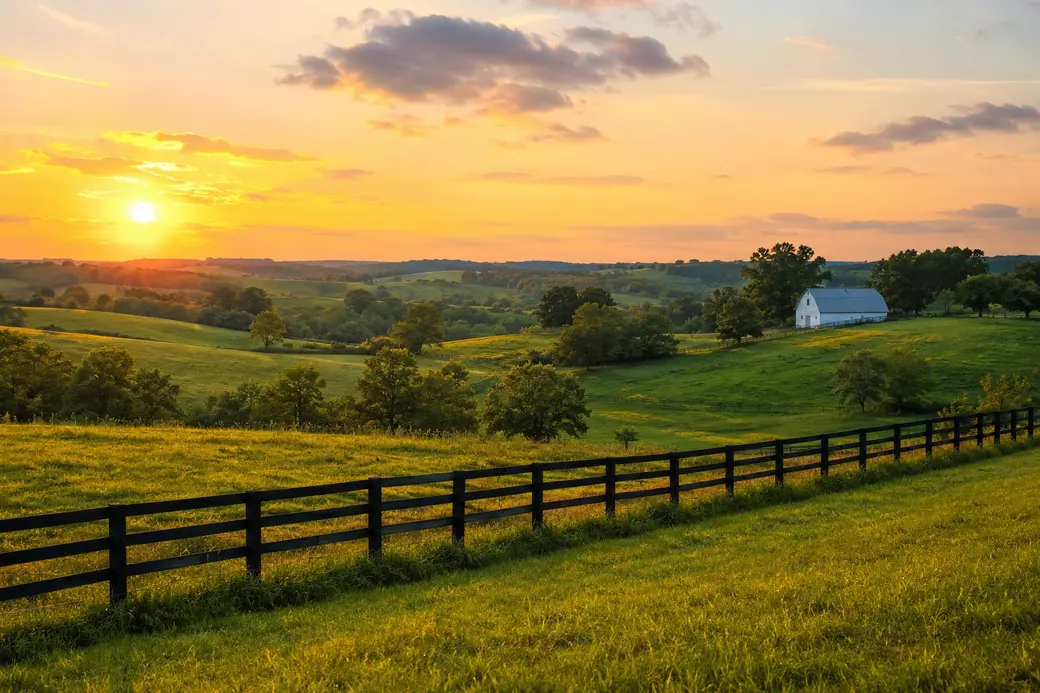
The rolling hills, farmland, scenic drives, and rural character of this county are part of what makes people fall in love with it in the first place.
That absolutely deserves protection.
But I also believe we need to acknowledge another reality:
We have a housing shortage.
We are aging at an alarming rate.
And younger generations are increasingly choosing not to stay here.
If we refuse to address housing opportunities at all, what does the future of Jo Daviess County look like 20 years from now?
Because my fear is this:
If local families cannot grow here… eventually large investors will.
And a county once known for tourism and community slowly becomes only tourism.
I truly do not believe that is anyone’s dream.
Affordable Housing Isn’t Just About “Building Cheap Homes”
Personally, I think it is a little unrealistic to believe we can simply “build affordable housing” and solve the issue overnight.
Instead, maybe we need to think differently.
What if the solution is creating movement within the housing market?
We need middle-aged families to have places to upgrade to.
Because when they move out of their starter homes, it creates inventory for the next generation of first-time buyers.
That movement matters.
I’m not suggesting every family should go build a house in the country.
I’m simply saying this is one lever we could pull to relieve some of the housing pressure in Jo Daviess County.
What We’re Seeing in the Real Estate Market
At DC Rise Real Estate, we have closed 80 transactions so far this year.
60 of those were in Jo Daviess County.
Out of all 80 transactions?
Only 4 were first-time home buyers.
That should concern all of us.
Because if young families cannot enter the market here, eventually they stop trying altogether.
And when they leave, they often don’t come back.
There Has to Be a Middle Ground
I don’t think one side is “right” and the other side is “wrong.”
I think both sides have valid concerns.
Protecting Jo Daviess County matters.
But so does creating opportunities for future generations to actually live here.
It would be foolish to think the answer is simply “build no houses.”
Growth without planning is dangerous.
But refusing all growth has consequences too.
The good news?
I truly believe there is a thoughtful middle ground somewhere in the middle of this conversation.
One that protects the beauty of Jo Daviess County while also protecting its future.
Because if we want our children and grandchildren to have the opportunity to call this place home someday… we need to make sure there is actually room for them to stay.
Categories
Recent Posts